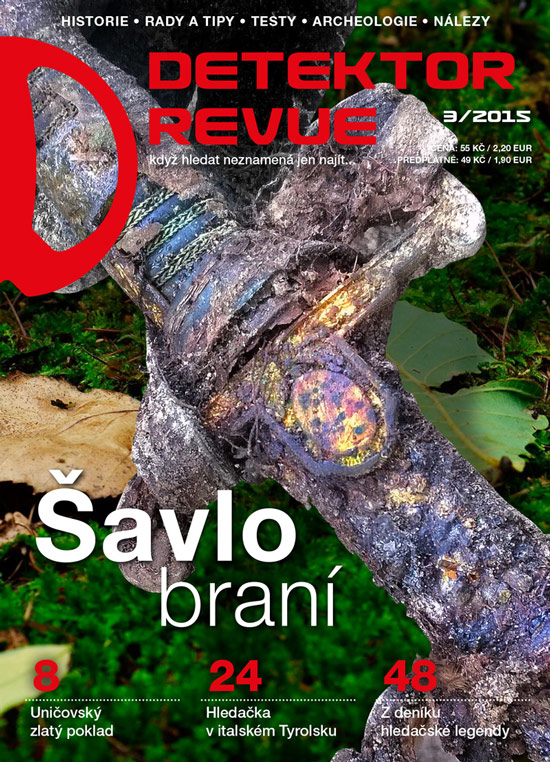
Detektor revue 3/2015
A harvest of sabres
The Uničov Gold Hoard · A treasure hunt in the Italian Tyrol · From the diary of a legendary treasure hunter
This is an introduction to a Czech-language printed issue, not a translated edition of the magazine.
Šavlobraní
Original Czech issue ↗Your discovery. A new audience.
Authors receive a copy of the issue in which their contribution is published. We can also discuss further collaboration.
Become a contributor →Machine translation of the original editorial information.
Archived issue; a purchase offer is not currently confirmed.
Inside this issue
- 8 · The Uničov Gold Hoard
- 24 · A treasure hunt in the Italian Tyrol
- 48 · From the diary of a legendary treasure hunter
Historical introduction: prices, events and dates refer to the original publication.
Dear readers,
The latest issue of Detektor revue has left the printers and is currently on its way to your letterboxes and your usual retail outlets. And, as always, here’s a little taster for you:
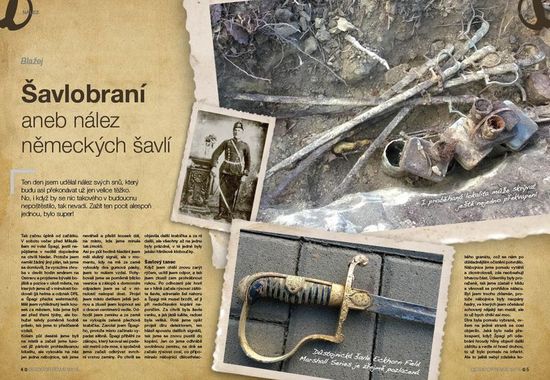
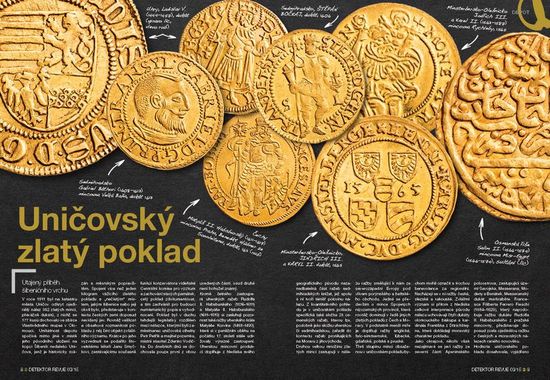
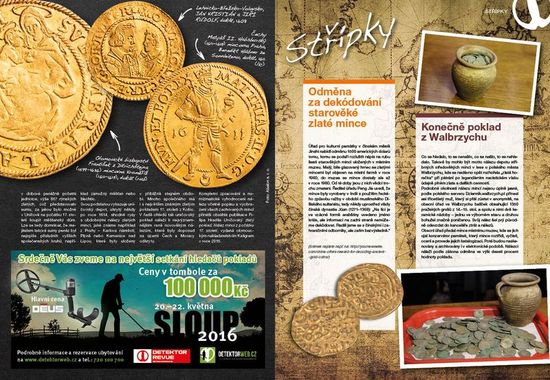
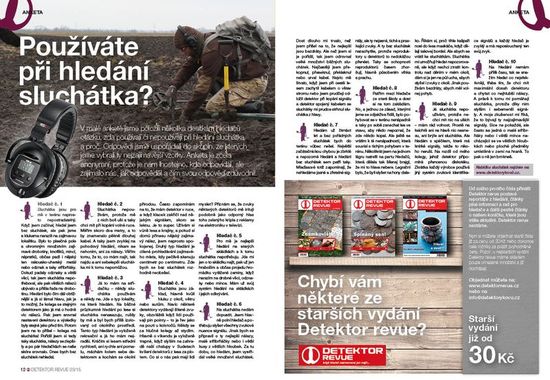
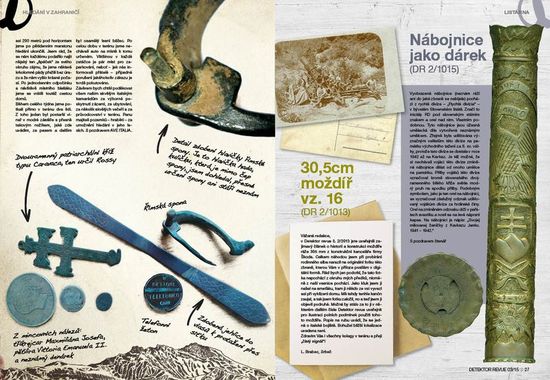
As usual, we begin with the ‘Artefact of the Month’ section, which this time features a unique World War II Reichskriegsflagge from the German Navy. The following is a report entitled ‘The Sabre Find’, or the discovery of German sabres, detailing the exceptional feat of the treasure hunter Blažej. In the article ‘The Uničov Gold Hoard’, we return to the unique discovery of gold coins on Šibeniční vrch (Gallows Hill) within the municipal boundaries of Uničov, which is now held in the collections of the Olomouc Museum. Our regular ‘Snippets’ column reports on the discovery of 1,350 Prague groschen near Walbrzych in Poland, and you can read about how to claim a reward for deciphering an ancient gold coin. “Do you use headphones when searching?” is the question we put to treasure hunters in our other regular column, ‘Poll’.
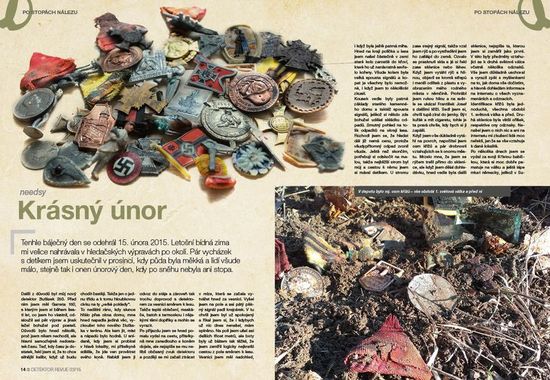
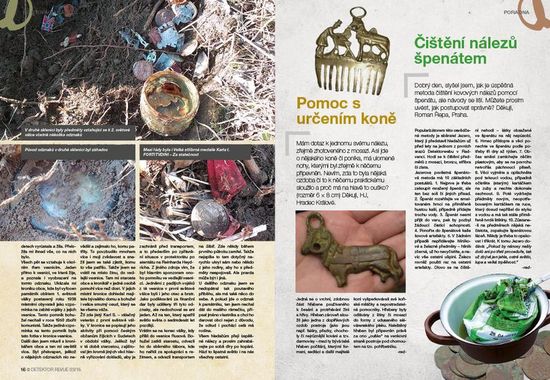
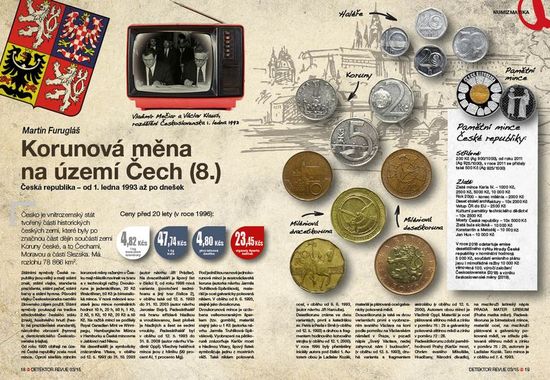
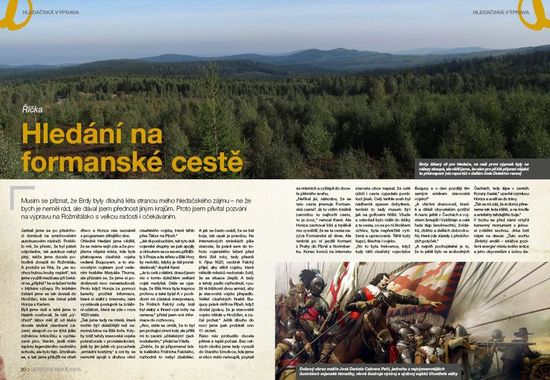
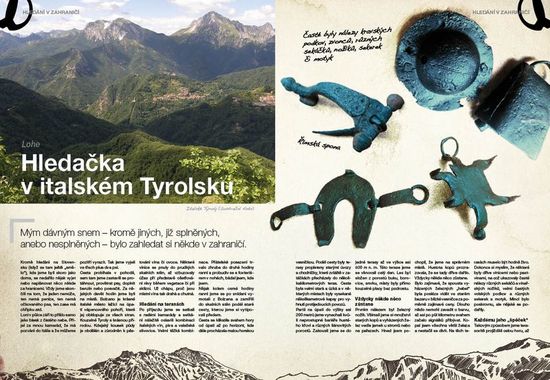
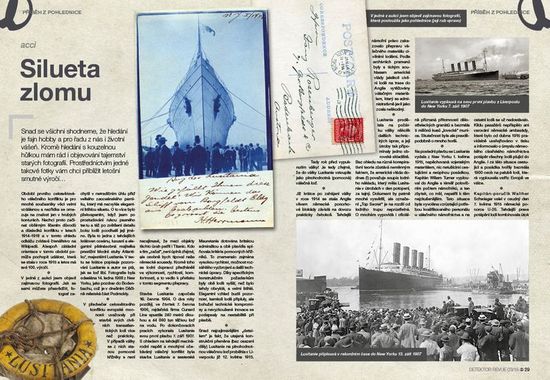
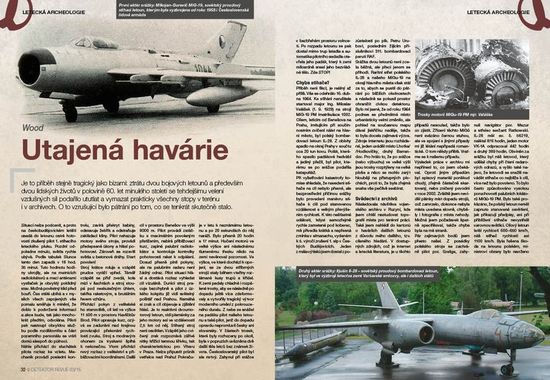
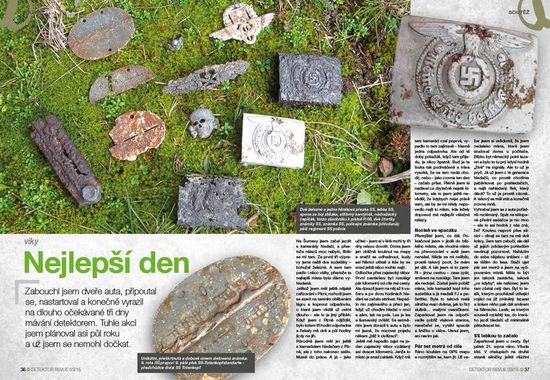
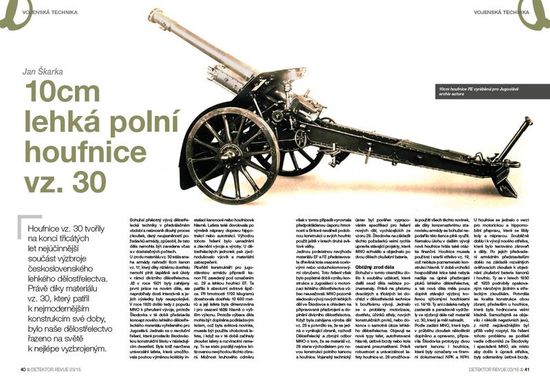
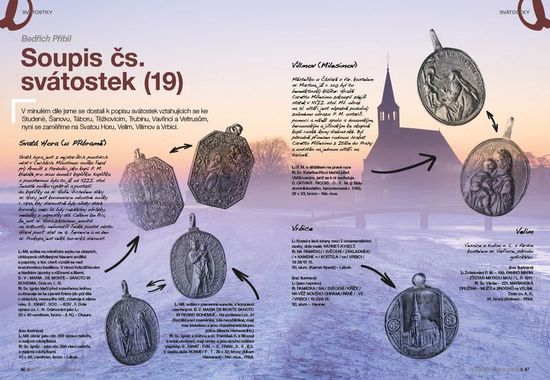
Fifteenth February proved a lucky day for the treasure hunter ‘needs’, which is why he titled his account of the discovery of badges buried in glass jars ‘A Lovely February’. This edition of our Advice Column is dedicated to a successful method for cleaning metal finds using spinach and one unusual find. The eighth instalment of Martin Furuglášeo’s numismatic series, The Crown Currency in Bohemia, is devoted to the period of the Czech Republic – from 1 January 1993 to the present day. The Brdy Hills are increasingly becoming a popular destination for metal detectorists – you can find out how one such expedition unfolded in a report by our colleague Říčka entitled ‘Searching on the Carters’ Track’. The feature ‘Treasure Hunter in the Italian Tyrol’ takes us abroad, where one treasure hunter, Lohe, fulfilled one of his dreams. As usual, the Letters page features your responses to published articles – this time regarding ‘A Cartridge as a Gift’ and the 30.5 cm Model 16 mortar. As well as searching with a magic wand, he also enjoys unravelling the mysteries of old photographs. You’ve no doubt already guessed who it is – with yet another of his gripping stories – ‘Silhouette of a Turning Point’ – acci is back. Another regular contributor to Detektor Revue, Wood, has also been investigating – he set out to trace the collision of two military aircraft over Prague in the 1960s, which the regime of the time managed to cover up completely. Viky has once again convinced himself that even in well-trodden areas, it is possible to find a spot that ‘pays off’. And this particular one, discovered in the Šumava Mountains, yielded a great deal. This was the subject of a report in Nejlepší den. Those interested in military technology will certainly welcome another study by the historian Jan Škarka, this time on the subject of the 10cm light field howitzer model 30. The nineteenth volume of Bedřich Přibil’s List of Czechoslovak Sacred Sites takes us, amongst other places, to Svatá Hora, Velim, Vilímov and Vrbice.
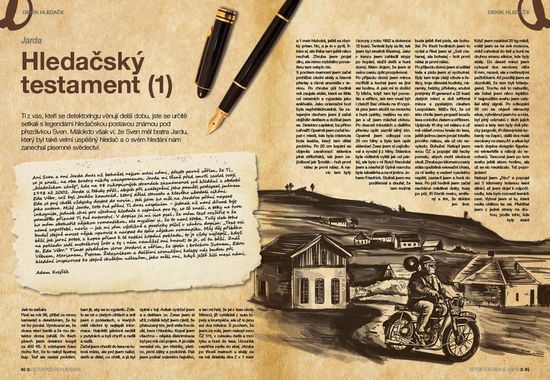
And to top it all off: in this issue, under the heading ‘The Treasure Hunter’s Testament’, we are beginning to reprint the diary of our fellow treasure hunter Jarda, which he has been keeping since the 1990s – that is, from the pioneering days of metal detecting in this country.
Preview photographs